Maras, Moray and the Salt Pans
The Incas' circular agricultural laboratory and three thousand salt pans clinging to a hillside.
- Duration
- Half day (approx. 6 h)
- Difficulty
- Easy
- Maximum altitude
- 3,500 m
- Group size
- Maximum 12 people
- Best season
- April to November
A half-day route covering two sites of unusual character within the Sacred Valley circuit.
Moray consists of concentric circular terraces cut into a natural depression. The temperature difference between the upper ring and the floor reaches around fifteen degrees, which allowed crops from different ecological zones to be trialled in a single location.
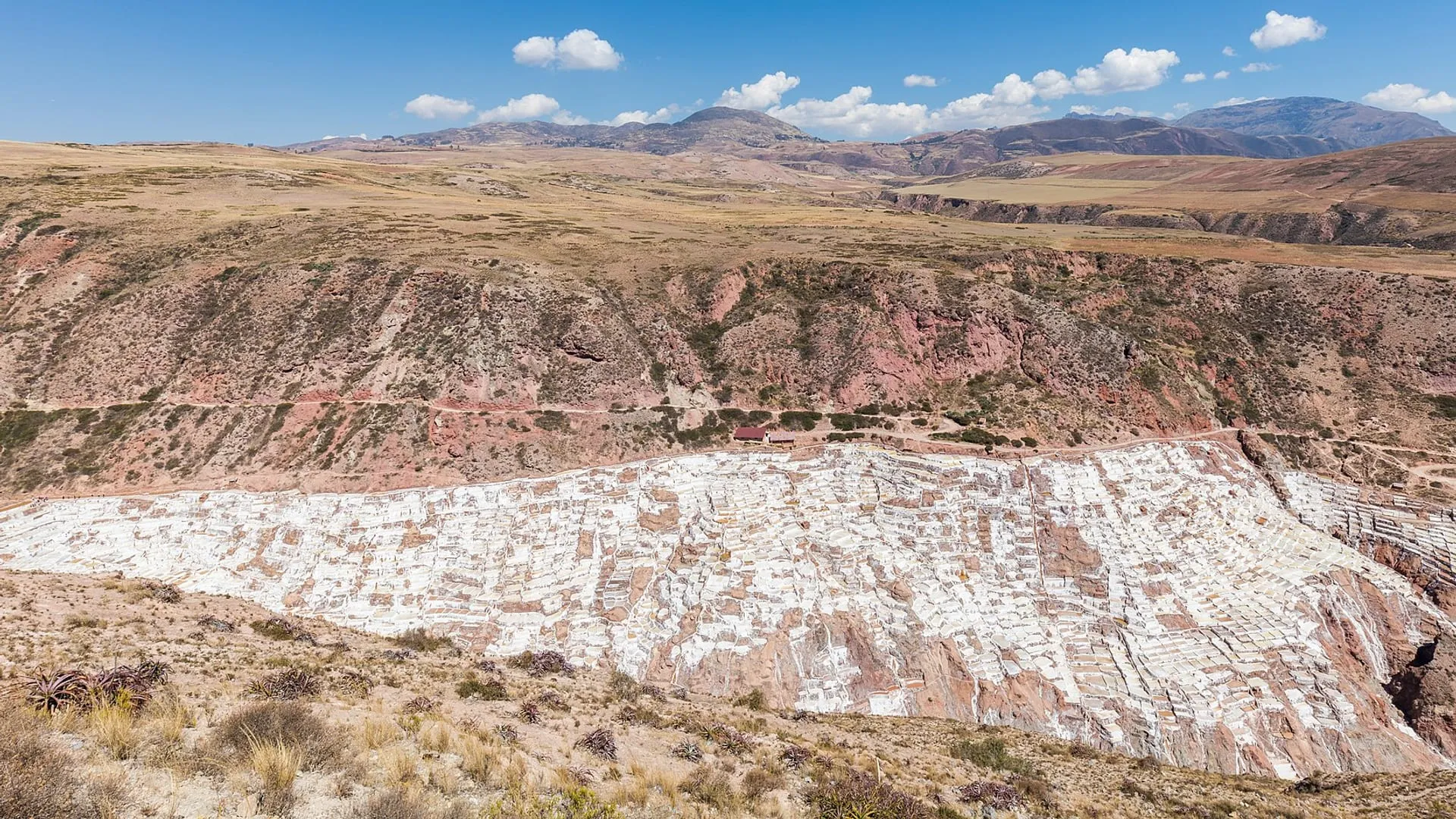
The Maras salt pans — sold by most agencies as the Maras salt mines, though nothing is mined there — comprise more than three thousand stepped basins on the hillside, fed by a saline spring in use since pre-Inca times. They are still worked by hand by families from the community, each with assigned basins.
Next departures
Daily morning departures
These are the dates this route runs, worked out from its schedule. Availability is confirmed when you enquire: in high season some departures are already closed.
Itinerary
08:30
Departure to Maras
Across the plateau between Cusco and the Sacred Valley, with views of the Urubamba range.
10:00
Moray
Concentric circular terraces that worked as an agricultural laboratory. There is roughly a 15-degree difference between the highest and lowest ring, which allowed crops from different ecological zones to be tested in one place.
3,500 m above sea level
11:30
Maras salt pans
Over three thousand stepped pans fed by a salty spring that has run since before the Incas. Families from the community still harvest the salt by hand.
3,380 m above sea level
13:00
Return
Back in Cusco around 14:30.
What's included
- Hotel pickup in Cusco
- Tourist transport
- Professional guide in English or Spanish
Not included
- Entry to Moray
- Entry to the Maras salt pans
- Lunch and tips
What to bring
- Sunscreen and a hat
- Closed shoes — the walkways at the salt pans are narrow and uneven
- Cash to buy pink salt
Frequently asked questions
Can it be combined with the Sacred Valley?
Yes, and that is the most common approach. Being a half day, it fits well alongside Chinchero or as an extension of the Sacred Valley tour. Let us know and we will put the combination together.
Can I walk among the salt pans?
You follow the marked paths; you cannot go down into the pans themselves. They belong to families from the community and are in active production.
Why avoid the rainy season?
Because there is no harvest. The pans fill with water and you lose the stepped white contrast, which is what you came to see.
When not to go: January to March — no salt is harvested in the rain and the pans sit full of water