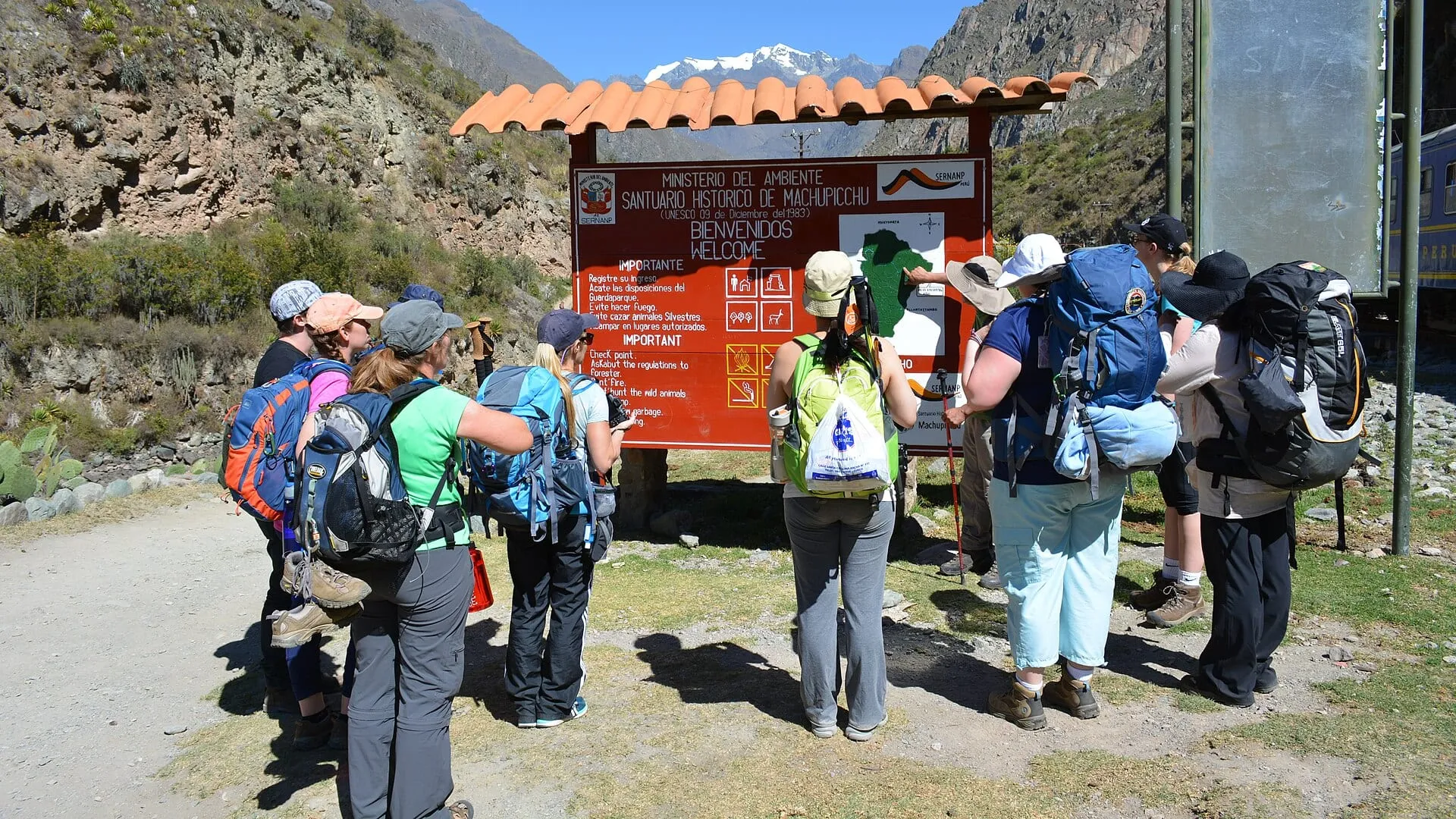
Classic Inca Trail — 4 days
The 42 km of original Inca road, entering Machu Picchu through the Sun Gate at dawn.
- Duration
- 4 days / 3 nights
- Difficulty
- Challenging
- Maximum altitude
- 4,215 m
- Group size
- Maximum 16 people
- Departures
- Subject to permit availability
- Acclimatisation needed
- 2 days in Cusco
- Best season
- May to September
A 42-kilometre route along the original Inca road, entering Machu Picchu through Inti Punku, the Sun Gate, on the morning of the fourth day. It is the only route that reaches the citadel by that approach.
Permits. The state issues 500 permits per day, a figure that includes guides, cooks and porters; effective availability for travellers is around 200 places per day. Permits are nominal and non-transferable, and require full name and passport number at the time of booking. For the June to September season they sell out three to six months in advance.
Annual closure. The route is closed throughout February for maintenance work and reopens on 1 March. March sees high demand as a result.
The most demanding day is the second, with over 1,200 metres of ascent to Dead Woman’s Pass at 4,215 m above sea level. Prior aerobic preparation and two days of acclimatisation in Cusco are recommended.
Itinerary
Day 1
Km 82 – Wayllabamba
A gentle start following the Urubamba, with views of the Llactapata site. About 12 km to find your rhythm.
3,000 m above sea level
Day 2
Dead Woman's Pass
The hard day. Sustained climbing to the highest point of the trek at 4,215 m, then down into the Pacaymayo valley. Over 1,200 metres of elevation gain.
4,215 m above sea level
Day 3
Runkurakay – Wiñay Wayna
The most beautiful day. Two more passes, original paved road, and the sites of Sayacmarca, Phuyupatamarca and Wiñay Wayna, perched above the valley.
3,600 m above sea level
Day 4
Inti Punku and Machu Picchu
Setting off before dawn to reach the Sun Gate with the first light, then walking down into the citadel. Guided visit and return train.
2,430 m above sea level
What's included
- Inca Trail entry permit
- Transport to km 82 and return train to Cusco
- Certified professional guide
- Porters for tents, food and shared equipment
- Double tents, sleeping mat and dining tent
- All meals from breakfast on day 1
- Cook and first-aid kit with oxygen
Not included
- Machu Picchu entrance ticket — charged separately as of 2026
- Sleeping bag (available to rent)
- Trekking poles (available to rent)
- Personal porter for your own belongings
- First breakfast and final lunch
- Tips for the crew
What to bring
- Your original passport — the same one used for the permit
- A 30 to 40 litre day pack
- Broken-in hiking boots, never brand new
- Warm clothing: the second campsite drops below freezing at night
- Rain poncho
- Head torch
Frequently asked questions
How far ahead do I need to book?
For June, July and August, three to six months. Of the 500 daily permits, a share corresponds to guides, cooks and porters, so actual availability for travellers is around 200 places per day. Once they are gone there is no waiting list. March also sees high demand, absorbing the backlog from the February closure.
Can I change the name on the booking?
No. The permit is issued with your name and passport number and is non-transferable. If you renew your passport before the trip, let us know in advance so we can arrange the correction.
How hard is it really?
The second day is the most demanding: over 1,200 metres of ascent to 4,215 m above sea level. No specific athletic preparation is required, but basic aerobic fitness and two days of prior acclimatisation in Cusco are.
Is the Machu Picchu ticket included?
Up to 2025 it was included. A ministerial resolution changed the arrangement and as of 2026 entry to the citadel is charged separately. We quote it alongside the package so the total is clear, but it is why this year's rates are not comparable with last year's.
What if I cannot get a permit?
The 5-day Salkantay is the direct alternative: no permit required, daily departures, and it crosses a wider range of ecological zones.
When not to go: February — the trail is closed. January and March are very wet